A lighthouse in a sardine tin

The task: Draw a lighthouse in a sardine tin.

One picture, ten ways of asking for it. Same model, same seed every time, so what changes is what was asked.

10 generations · 2 came out worse than their parents · flux-2-klein-4b mistral-small-3.1-24b-instruct llama-3.1-8b-instruct-fp8-fast · seed 424242 throughout

The root

Base model, bare prompt

What flux-2-klein-4b drew for this node

Editor’s note

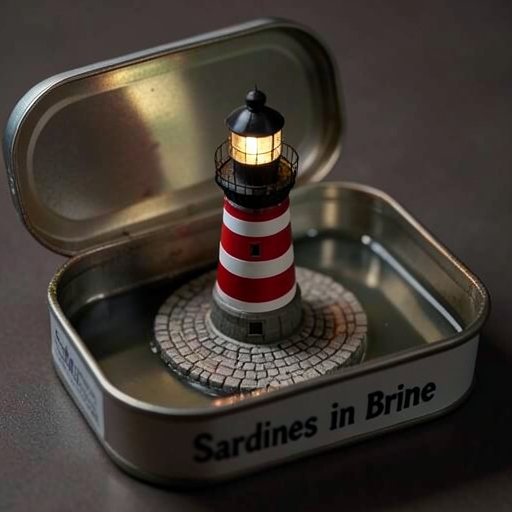
The starting point. Four words, and the model fills in the rest: a centred, glossy lighthouse on a cobbled island in an empty tin. Competent. It also printed “Sardines in Brine” on the side, which nobody asked for, and left out the sardines.

How it was made: 1 call, 26.1 neurons
  1. image @cf/black-forest-labs/flux-2-klein-4b

    512×512, seed 424242 · 2026-10-14 21:51 UTC · 14.9 s · 26.1 neurons · cache ea79c2057356

    Prompt

    a lighthouse in a sardine tin

Generation 2 · from Base model, bare prompt

+ a specific subject

Pathway 1 · Module 2: Say what you mean

The parent’s image
Before: Base model, bare prompt
This node’s image
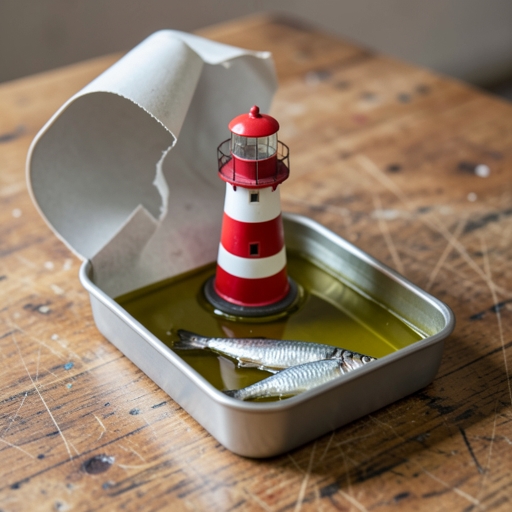
After: + a specific subject

Editor’s note

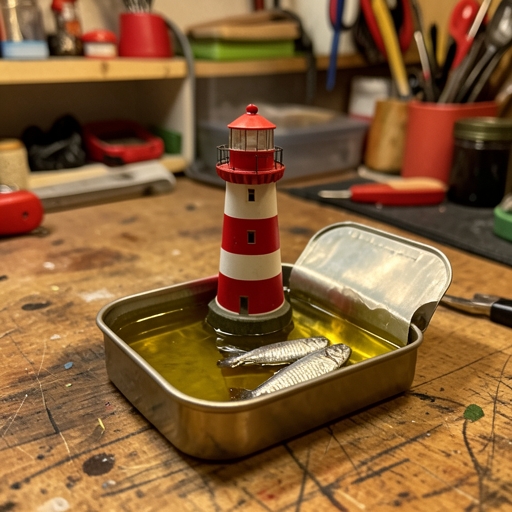
Better. Olive oil for a sea, two sardines for rocks, the lid peeled back, a scratched bench: every specific made it in. The lid curls more like a page than a wave, and the tin is still dead centre.

What changed in the input

+242 −1 characters

a small red-and-white striped lighthouse standing upright in aan open sardine tin, the peeled lid curled back like a breaking wave, golden olive oil filling the tin as a calm sea, two silver sardines lying in the oil like rocks, the tin resting on a scratched wooden workbench
How it was made: 1 call, 26.1 neurons
  1. image @cf/black-forest-labs/flux-2-klein-4b

    512×512, seed 424242 · 2026-10-14 21:52 UTC · 12.2 s · 26.1 neurons · cache 6dfc62cc032b

    Prompt

    a small red-and-white striped lighthouse standing upright in an open sardine tin, the peeled lid curled back like a breaking wave, golden olive oil filling the tin as a calm sea, two silver sardines lying in the oil like rocks, the tin resting on a scratched wooden workbench

Generation 3 · from + a specific subject

+ a camera position

Pathway 1 · Module 3: Where’s the camera?

The parent’s image
Before: + a specific subject
This node’s image
After: + a camera position

Editor’s note

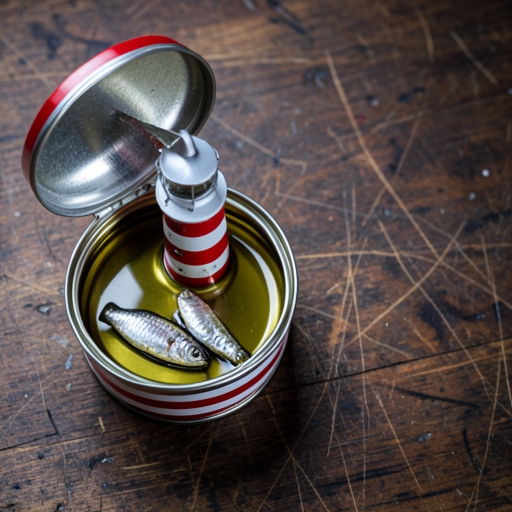
Better. Higher, off-centre, bare scratched wood around it: most of the camera direction took. Not all: the tin went to the upper left instead of the lower, the view is three-quarter rather than straight down, and the tin itself turned round and grew stripes.

What changed in the input

+125 −9 characters

a small red-and-white striped lighthouse standing upright in an open sardine tin, the peeled lid curled back like a breaking wave, golden olive oil filling the tin as a calm sea, two silver sardines lying in the oil like rocks, the tin resting on a scratched wooden workbenchworkbench, seen from directly above, the tin small in the lower left third of the frame, the rest of the frame bare dark wood
How it was made: 1 call, 26.1 neurons
  1. image @cf/black-forest-labs/flux-2-klein-4b

    512×512, seed 424242 · 2026-10-14 21:52 UTC · 23.7 s · 26.1 neurons · cache a7604358f176

    Prompt

    a small red-and-white striped lighthouse standing upright in an open sardine tin, the peeled lid curled back like a breaking wave, golden olive oil filling the tin as a calm sea, two silver sardines lying in the oil like rocks, the tin resting on a scratched wooden workbench, seen from directly above, the tin small in the lower left third of the frame, the rest of the frame bare dark wood

Generation 4 · from + a camera position

+ one light source

Pathway 1 · Module 4: Light it like you mean it

The parent’s image
Before: + a camera position
This node’s image
After: + one light source

Editor’s note

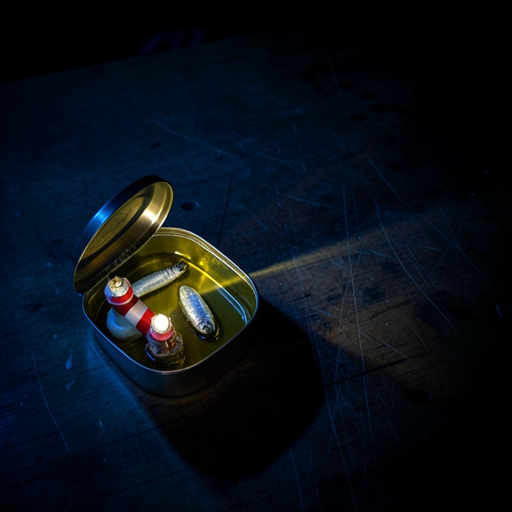
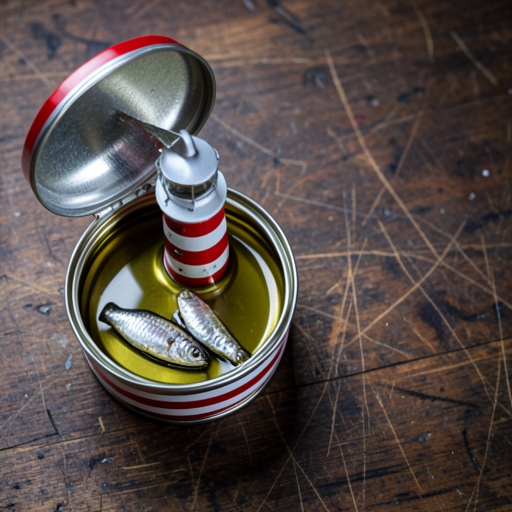
Better. One beam across the bench, blue dark everywhere else: the light direction landed, and it is the most atmospheric picture in the tree. The tin drifted back to the middle, and there are now two little lighthouses.

What changed in the input

+116 −4 characters

a small red-and-white striped lighthouse standing upright in an open sardine tin, the peeled lid curled back like a breaking wave, golden olive oil filling the tin as a calm sea, two silver sardines lying in the oil like rocks, the tin resting on a scratched wooden workbench, seen from directly above, the tin small in the lower left third of the frame, the rest of the frame bare dark woodwood, at night, lit only by the lighthouse lamp, one warm beam crossing the bench, deep blue shadows everywhere else
How it was made: 1 call, 26.1 neurons
  1. image @cf/black-forest-labs/flux-2-klein-4b

    512×512, seed 424242 · 2026-10-14 21:52 UTC · 12.3 s · 26.1 neurons · cache ce13015d7efc

    Prompt

    a small red-and-white striped lighthouse standing upright in an open sardine tin, the peeled lid curled back like a breaking wave, golden olive oil filling the tin as a calm sea, two silver sardines lying in the oil like rocks, the tin resting on a scratched wooden workbench, seen from directly above, the tin small in the lower left third of the frame, the rest of the frame bare dark wood, at night, lit only by the lighthouse lamp, one warm beam crossing the bench, deep blue shadows everywhere else

Generation 4 · from + a camera position

+ critique and revise

Pathway 1 · Module 7: Is it any good?

The parent’s image
Before: + a camera position
This node’s image
After: + critique and revise

Editor’s note

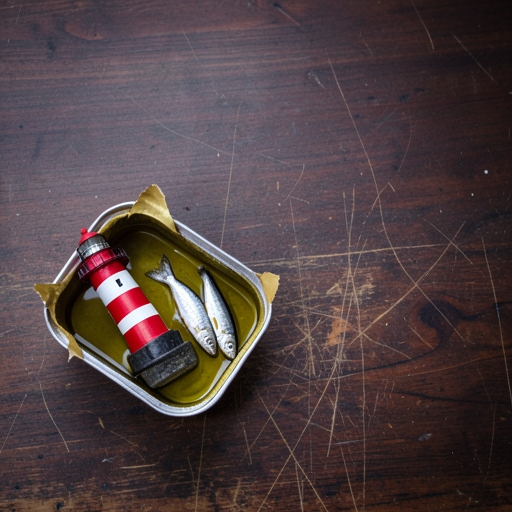
Mixed. The critic named real misses (too big, centred). The reviser then turned “it is leaning”, a complaint, into an instruction: “leans slightly to its left”. The camera is finally straight down, and the lighthouse is lying in the oil. Critique helps only if the rewrite reads it right.

What changed in the input

+167 −149 characters

aA small red-and-white striped lighthouse standingleans uprightslightly into anits openleft, sardineits tin,base thesubmerged peeledin lidgolden curledolive backoil likewithin aan breakingopen wave,sardine goldentin. oliveThe oilpeeled fillinglid thecurls tinback aslike a calmbreaking sea,wave, two silver sardines lying in the oil like rocks,rocks. theThe tin restingrests on a scratched wooden workbench, seenviewed from directly above, the tin smallpositioned in the lower left third of the frame, with the rest of the frame filled with bare dark woodwood.
How it was made: 3 calls, 50.6 neurons
  1. critique @cf/mistralai/mistral-small-3.1-24b-instruct

    max_tokens 260, temperature 0.2, seed 7 · 2026-10-14 21:52 UTC · 2.6 s · 20.4 neurons · cache 4bb9369571dc

    System text (115 characters)
    You are an exacting art director. You judge an image against its brief, plainly and specifically. You never praise.

    User

    Brief: a lighthouse in a sardine tin
    Prompt that made the image: a small red-and-white striped lighthouse standing upright in an open sardine tin, the peeled lid curled back like a breaking wave, golden olive oil filling the tin as a calm sea, two silver sardines lying in the oil like rocks, the tin resting on a scratched wooden workbench, seen from directly above, the tin small in the lower left third of the frame, the rest of the frame bare dark wood
    List the three biggest ways the image misses the brief or falls back on generic defaults (a centred subject, generic light, missing or wrong details). One line each, about what is visible.

    Images (exactly as sent)

    Output

    1. The lighthouse is not small, it is almost half the size of the tin.
    2. The lighthouse is not standing upright, it is leaning.
    3. The tin is not in the lower left third of the frame, it is centered.
  2. revise @cf/meta/llama-3.1-8b-instruct-fp8-fast

    max_tokens 200, temperature 0.6, seed 7 · 2026-10-14 21:53 UTC · 0.8 s · 4.2 neurons · cache 69ba296cf581

    System text (264 characters)
    You revise prompts for an image model. Keep what already works. Fix each problem the critique names with a concrete visual instruction (a material, a position, a light source, a camera position). No hype words: masterpiece, 8k, stunning, beautiful, ultra detailed.

    User

    Brief: a lighthouse in a sardine tin
    Current prompt: a small red-and-white striped lighthouse standing upright in an open sardine tin, the peeled lid curled back like a breaking wave, golden olive oil filling the tin as a calm sea, two silver sardines lying in the oil like rocks, the tin resting on a scratched wooden workbench, seen from directly above, the tin small in the lower left third of the frame, the rest of the frame bare dark wood
    Critique:
    1. The lighthouse is not small, it is almost half the size of the tin.
    2. The lighthouse is not standing upright, it is leaning.
    3. The tin is not in the lower left third of the frame, it is centered.
    
    Write the revised prompt only: one paragraph, under 90 words.

    Output

    A small red-and-white striped lighthouse leans slightly to its left, its base submerged in golden olive oil within an open sardine tin. The peeled lid curls back like a breaking wave, two silver sardines lying in the oil like rocks. The tin rests on a scratched wooden workbench, viewed from directly above, positioned in the lower left third of the frame, with the rest of the frame filled with bare dark wood.
  3. image @cf/black-forest-labs/flux-2-klein-4b

    512×512, seed 424242 · 2026-10-14 21:53 UTC · 19.7 s · 26.1 neurons · cache 3ea992e95e0a

    Prompt

    A small red-and-white striped lighthouse leans slightly to its left, its base submerged in golden olive oil within an open sardine tin. The peeled lid curls back like a breaking wave, two silver sardines lying in the oil like rocks. The tin rests on a scratched wooden workbench, viewed from directly above, positioned in the lower left third of the frame, with the rest of the frame filled with bare dark wood.

Generation 3 · from + a specific subject

+ a reference image

public/about/slopwright-760.webp

The parent’s image
Before: + a specific subject
This node’s image
After: + a reference image

Editor’s note

Mixed. The reference brought the workshop with it: pens, tools, a cluttered shelf, warm light. The subject didn’t change at all, and neither did the centred composition.

What changed in the input

+103 −9 characters

a small red-and-white striped lighthouse standing upright in an open sardine tin, the peeled lid curled back like a breaking wave, golden olive oil filling the tin as a calm sea, two silver sardines lying in the oil like rocks, the tin resting on a scratched wooden workbenchworkbench, made and photographed with the same materials and warm workshop light as the reference image
How it was made: 1 call, 31.4 neurons
  1. image @cf/black-forest-labs/flux-2-klein-4b

    512×512, seed 424242 · 2026-10-14 21:53 UTC · 6.9 s · 31.4 neurons · cache f5eba1c07117

    Prompt

    a small red-and-white striped lighthouse standing upright in an open sardine tin, the peeled lid curled back like a breaking wave, golden olive oil filling the tin as a calm sea, two silver sardines lying in the oil like rocks, the tin resting on a scratched wooden workbench, made and photographed with the same materials and warm workshop light as the reference image

    Reference images (exactly as sent)

    Reference image: public/about/slopwright-760.webp

Generation 2 · from Base model, bare prompt

+ the curriculum, as a skill

Pathway 1 · Module 1: Generic slop Pathway 1 · Module 2: Say what you mean Pathway 1 · Module 3: Where’s the camera? Pathway 1 · Module 4: Light it like you mean it

The parent’s image
Before: Base model, bare prompt
This node’s image
After: + the curriculum, as a skill

Editor’s note

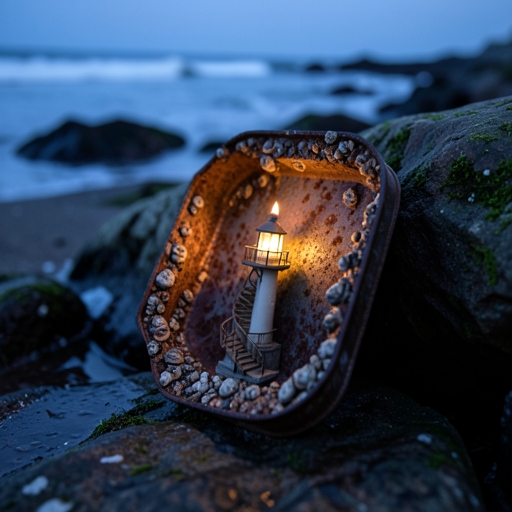
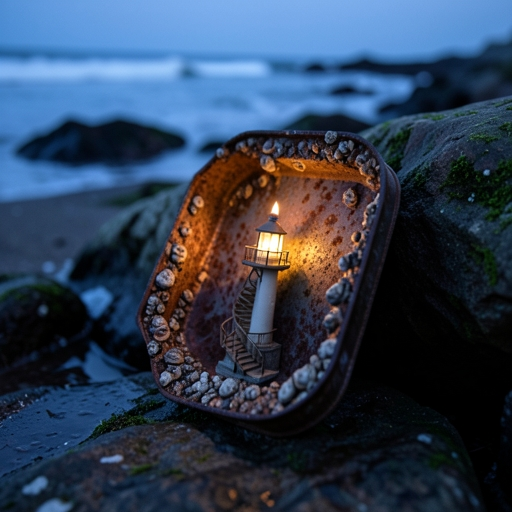
Mixed. Given four lessons, the small model wrote its own prompt: specific (a rusty, barnacled tin, a carved wooden lighthouse) and lit, which is what modules 2 and 4 teach. It also moved the tin onto a rocky beach, so the sea is beside the tin instead of in it, and it never said where the camera is (module 3).

What changed in the input

+357 −21 characters

aA lighthousesmall, rusty, old-fashioned sardine tin, partially crushed and covered in barnacles, lies abandoned on a sardinerocky tinbeach. Inside, a single, flickering match burns, casting eerie shadows on the tin's walls. At the tin's centre, a miniature, intricately carved wooden lighthouse, no larger than a thumb, stands upright, its tiny lantern glowing with a warm, golden light.
How it was made: 2 calls, 34.1 neurons
  1. prompt-writer @cf/meta/llama-3.1-8b-instruct-fp8-fast

    max_tokens 220, temperature 0.6, seed 7 · 2026-10-14 21:53 UTC · 0.8 s · 8.0 neurons · cache fba00fb18ffb

    System text (5,131 characters)
    You write prompts for an image model. Apply this teaching:
    
    Module 1, Generic slop: What the machine makes when you don’t say anything.
    
    The average of everything
    An image model has seen a staggering number of pictures. When your prompt leaves something out, it doesn’t leave it blank. It fills the gap with the most typical answer it knows.
    Ask for “a dog in a park” and every decision you skipped gets made for you: the breed, the angle, the light, the lens, the mood. The result is the statistical middle of all dogs in all parks. Pleasant. Instantly forgettable. That’s generic slop.
    
    Generic: a dog in a park
    (Four words in, a thousand unmade decisions out.)
    
    Spotting the default look
    Generic output has tells. The subject sits dead centre. The background melts into soft blur. The light is warm, golden and from nowhere in particular. Surfaces are a little too smooth and a little too shiny. Everything is tidy, symmetrical and pleased with itself.
    None of these are mistakes. They’re defaults. The rest of this pathway is about replacing defaults with decisions.
    
    Magic words aren’t
    Words like “masterpiece”, “8k”, “ultra detailed” and “award-winning” mostly push an image further toward the glossy average. They describe how you hope it turns out, not what it shows. Keep them out. Say what you see instead.
    
    ---
    
    Module 2, Say what you mean: Subjects with specifics. Nouns that pull their weight.
    
    Specific beats more
    The fastest way out of slop is a specific subject. Not a longer prompt: a more exact one. Replace category words (“a cat”, “a chair”) with the particular thing you mean.
    Useful kinds of specifics: what it’s made of (velvet, rusted steel, wet paper), its condition (chipped, brand new, half-melted), count and size (three, tiny, enormous), what it’s doing (asleep, mid-jump, leaking), and where it is (a launderette at night, a hotel corridor).
    
    Generic: a cat on a chair
    Directed: a one-eared ginger tomcat asleep on a worn green velvet armchair, stuffing poking through one arm, in a cluttered antique shop
    (Same subject. One of them happened to someone.)
    
    Front-load what matters
    Models pay more attention to what comes first. Lead with the subject and its key specifics; put the setting and finishing details after.
    If a detail doesn’t change what you’d see, cut it. “A very very beautiful cat” has two wasted words and one hype word.
    
    Concrete, not abstract
    “Loneliness” isn’t something a camera can see. “One coffee cup on a table set for six” is. Translate feelings into objects, arrangements and situations, and let the viewer do the feeling.
    
    ---
    
    Module 3, Where’s the camera?: Composition: shot size, angle, lens and empty space.
    
    Decide where we’re standing
    Composition is the set of decisions about the camera: how much we see (shot size), where we’re looking from (angle), what kind of lens it feels like, and where the subject sits in the frame.
    Shot size: extreme close-up, close-up, medium shot, wide shot, extreme wide shot. Angle: eye level, low angle looking up, high angle looking down, directly overhead, from behind. Lens: wide-angle (exaggerated, close), telephoto (flattened, distant), macro (tiny things huge).
    
    Generic: a lighthouse
    Directed: a tiny red lighthouse at the bottom of the frame, seen from far above, extreme wide shot, a vast empty grey sea filling the rest of the image
    (Moving the camera turned a postcard into a feeling.)
    
    Use the empty part
    Generic images centre the subject and fill the frame. Try the opposite: put the subject off to one side, small, with lots of empty space (“negative space”). Emptiness is a decision. It tells the viewer where to look and how to feel about it.
    
    Say it plainly
    Use plain camera language: “seen from directly above”, “low angle, looking up”, “close-up”, “subject in the lower left third”. Models know these words because photographers write them all the time.
    
    ---
    
    Module 4, Light it like you mean it: Light source, direction, quality and a limited palette.
    
    Four questions about light
    Generic images are lit by a warm glow from nowhere. Real light has a source, a direction and a quality. Answer four questions and you’ve directed it:
    What is the light? (noon sun, one bare bulb, a fridge door, neon sign, overcast sky). Where does it come from? (from the left, behind the subject, overhead, from below). Is it hard or soft? (hard light makes crisp shadows; soft light from big or cloudy sources wraps gently). What colour is it? (cold blue dusk, sodium-orange streetlight).
    
    Generic: a bowl of soup
    Directed: a bowl of tomato soup on a kitchen table at night, lit only by the open fridge door to the right, cold blue-white light, hard shadows, everything else dark
    (The soup didn’t change. The story did.)
    
    Limit the palette
    Slop uses every colour at once, nicely balanced. Pick two or three colours and say so: “only rust orange and pale teal”, “muted greys with one red object”. A limited palette looks intentional because it is.
    
    Shadows are information
    Long shadows mean low sun. Hard shadows mean a small, bright source. No shadows means overcast or studio. If you describe the shadows, you’ve described the light.

    User

    Write one image prompt for: a lighthouse in a sardine tin. Reply with the prompt only: one paragraph, under 80 words.

    Output

    A small, rusty, old-fashioned sardine tin, partially crushed and covered in barnacles, lies abandoned on a rocky beach. Inside, a single, flickering match burns, casting eerie shadows on the tin's walls. At the tin's centre, a miniature, intricately carved wooden lighthouse, no larger than a thumb, stands upright, its tiny lantern glowing with a warm, golden light.
  2. image @cf/black-forest-labs/flux-2-klein-4b

    512×512, seed 424242 · 2026-10-14 21:53 UTC · 16.7 s · 26.1 neurons · cache 63a943d5b188

    Prompt

    A small, rusty, old-fashioned sardine tin, partially crushed and covered in barnacles, lies abandoned on a rocky beach. Inside, a single, flickering match burns, casting eerie shadows on the tin's walls. At the tin's centre, a miniature, intricately carved wooden lighthouse, no larger than a thumb, stands upright, its tiny lantern glowing with a warm, golden light.

Generation 3 · from + the curriculum, as a skill

+ critique and revise

Pathway 1 · Module 7: Is it any good?

The parent’s image
Before: + the curriculum, as a skill
This node’s image
After: + critique and revise

Editor’s note

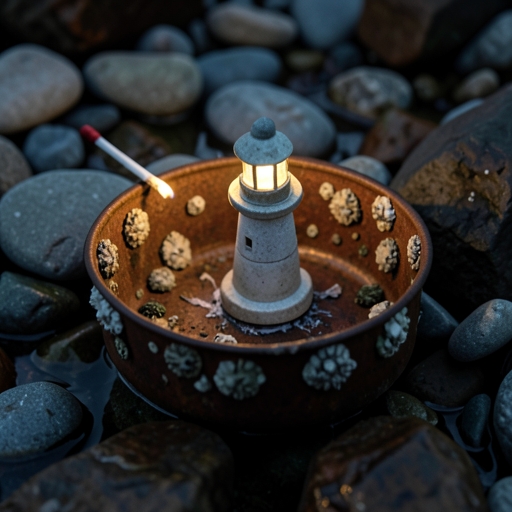
Worse. The critic said the light was a candle “not a match as specified in the brief”; the brief never mentioned a match. The reviser kept the lighthouse “at the tin’s centre” and added “near the tin’s edge”. The sea is gone, the tin is a round bowl on pebbles, and the lighthouse is dead centre.

What changed in the input

+122 −44 characters

A small, rusty, old-fashioned sardine tin, partially crushed and covered in barnacles, lies abandoned on a rocky beach. Inside, aA single, flickering match burns,burns in the tin's corner, casting eerie shadows on the tin's walls. At the tin's centre, a miniature, intricately carvedsmooth woodenstone lighthouse, no larger than a thumb, stands upright, its tiny lantern glowing with a warm, golden light. The lighthouse is positioned near the tin's edge, as if on the verge of tipping over.
How it was made: 3 calls, 51.3 neurons
  1. critique @cf/mistralai/mistral-small-3.1-24b-instruct

    max_tokens 260, temperature 0.2, seed 7 · 2026-10-14 21:53 UTC · 1.9 s · 20.6 neurons · cache fc3a06866092

    System text (115 characters)
    You are an exacting art director. You judge an image against its brief, plainly and specifically. You never praise.

    User

    Brief: a lighthouse in a sardine tin
    Prompt that made the image: A small, rusty, old-fashioned sardine tin, partially crushed and covered in barnacles, lies abandoned on a rocky beach. Inside, a single, flickering match burns, casting eerie shadows on the tin's walls. At the tin's centre, a miniature, intricately carved wooden lighthouse, no larger than a thumb, stands upright, its tiny lantern glowing with a warm, golden light.
    List the three biggest ways the image misses the brief or falls back on generic defaults (a centred subject, generic light, missing or wrong details). One line each, about what is visible.

    Images (exactly as sent)

    Output

    1. The light source is a candle, not a match as specified in the brief.
    2. The lighthouse is not intricately carved wood, but rather a solid, smooth material.
    3. The subject is centered, which is a generic compositional default that doesn't add interest.
  2. revise @cf/meta/llama-3.1-8b-instruct-fp8-fast

    max_tokens 200, temperature 0.6, seed 7 · 2026-10-14 21:53 UTC · 1.7 s · 4.6 neurons · cache 62094656d331

    System text (264 characters)
    You revise prompts for an image model. Keep what already works. Fix each problem the critique names with a concrete visual instruction (a material, a position, a light source, a camera position). No hype words: masterpiece, 8k, stunning, beautiful, ultra detailed.

    User

    Brief: a lighthouse in a sardine tin
    Current prompt: A small, rusty, old-fashioned sardine tin, partially crushed and covered in barnacles, lies abandoned on a rocky beach. Inside, a single, flickering match burns, casting eerie shadows on the tin's walls. At the tin's centre, a miniature, intricately carved wooden lighthouse, no larger than a thumb, stands upright, its tiny lantern glowing with a warm, golden light.
    Critique:
    1. The light source is a candle, not a match as specified in the brief.
    2. The lighthouse is not intricately carved wood, but rather a solid, smooth material.
    3. The subject is centered, which is a generic compositional default that doesn't add interest.
    
    Write the revised prompt only: one paragraph, under 90 words.

    Output

    A small, rusty, old-fashioned sardine tin, partially crushed and covered in barnacles, lies abandoned on a rocky beach. A single, flickering match burns in the tin's corner, casting eerie shadows on the walls. At the tin's centre, a miniature, smooth stone lighthouse, no larger than a thumb, stands upright, its tiny lantern glowing with a warm, golden light. The lighthouse is positioned near the tin's edge, as if on the verge of tipping over.
  3. image @cf/black-forest-labs/flux-2-klein-4b

    512×512, seed 424242 · 2026-10-14 21:54 UTC · 26.4 s · 26.1 neurons · cache 98bf57176c9e

    Prompt

    A small, rusty, old-fashioned sardine tin, partially crushed and covered in barnacles, lies abandoned on a rocky beach. A single, flickering match burns in the tin's corner, casting eerie shadows on the walls. At the tin's centre, a miniature, smooth stone lighthouse, no larger than a thumb, stands upright, its tiny lantern glowing with a warm, golden light. The lighthouse is positioned near the tin's edge, as if on the verge of tipping over.

Generation 3 · from + the curriculum, as a skill

+ a reference image

public/about/slopwright-760.webp

The parent’s image
Before: + the curriculum, as a skill
This node’s image
After: + a reference image

Editor’s note

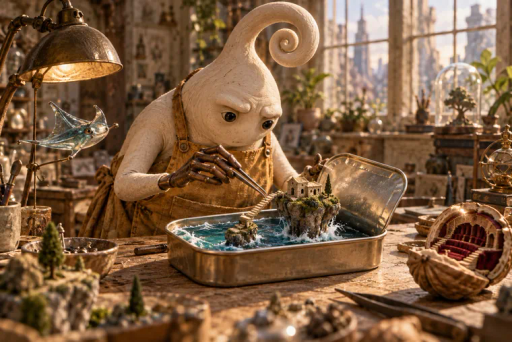
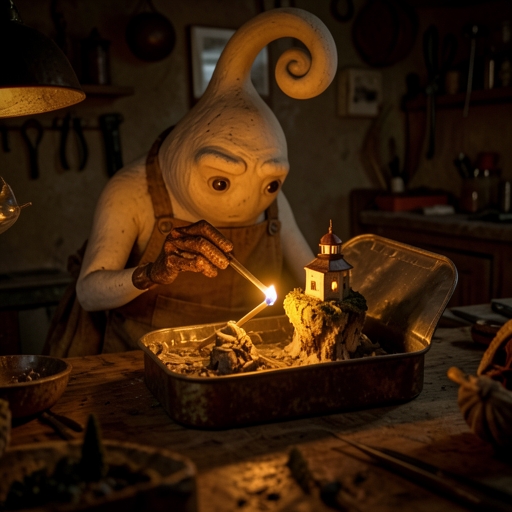
Mixed. The reference was there for its light and materials. It also contains the Slopwright, so he arrived too, and is lighting the match. A reference image brings everything in it, not just the part you meant.

What changed in the input

+67 −0 characters

A small, rusty, old-fashioned sardine tin, partially crushed and covered in barnacles, lies abandoned on a rocky beach. Inside, a single, flickering match burns, casting eerie shadows on the tin's walls. At the tin's centre, a miniature, intricately carved wooden lighthouse, no larger than a thumb, stands upright, its tiny lantern glowing with a warm, golden light. Match the materials and warm workshop light of the reference image.
How it was made: 1 call, 31.4 neurons
  1. image @cf/black-forest-labs/flux-2-klein-4b

    512×512, seed 424242 · 2026-10-14 21:54 UTC · 6.1 s · 31.4 neurons · cache 4cf8d9b202e1

    Prompt

    A small, rusty, old-fashioned sardine tin, partially crushed and covered in barnacles, lies abandoned on a rocky beach. Inside, a single, flickering match burns, casting eerie shadows on the tin's walls. At the tin's centre, a miniature, intricately carved wooden lighthouse, no larger than a thumb, stands upright, its tiny lantern glowing with a warm, golden light. Match the materials and warm workshop light of the reference image.

    Reference images (exactly as sent)

    Reference image: public/about/slopwright-760.webp

Generation 2 · from Base model, bare prompt

+ “make it better”

The parent’s image
Before: Base model, bare prompt
This node’s image
After: + “make it better”

Editor’s note

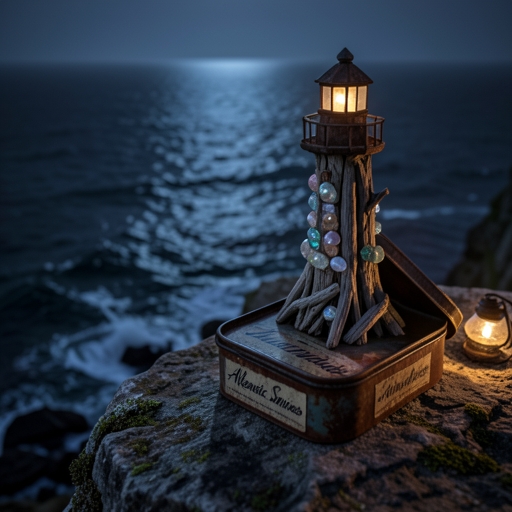
Worse. “Improve this prompt”, with no guidance, gets a list of pretty words: driftwood, sea glass, a “dark, mysterious ocean”. The lighthouse now stands on top of the tin, by the sea. Moodier, and further from the idea.

What changed in the input

+239 −16 characters

aA lighthouseminiature inlighthouse, intricately crafted from driftwood and sea glass, rises from the lid of a vintage, rusted sardine tintin, perched precariously on a worn, weathered rock, as the soft glow of a lantern spills out onto the dark, mysterious ocean below.
How it was made: 2 calls, 28.4 neurons
  1. prompt-writer @cf/meta/llama-3.1-8b-instruct-fp8-fast

    max_tokens 220, temperature 0.6, seed 7 · 2026-10-14 21:54 UTC · 0.7 s · 2.4 neurons · cache f7cae0ca5b2e

    No system text.

    User

    Improve this image prompt: a lighthouse in a sardine tin. Reply with the prompt only.

    Output

    A miniature lighthouse, intricately crafted from driftwood and sea glass, rises from the lid of a vintage, rusted sardine tin, perched precariously on a worn, weathered rock, as the soft glow of a lantern spills out onto the dark, mysterious ocean below.
  2. image @cf/black-forest-labs/flux-2-klein-4b

    512×512, seed 424242 · 2026-10-14 21:54 UTC · 24.4 s · 26.1 neurons · cache 243716a37a68

    Prompt

    A miniature lighthouse, intricately crafted from driftwood and sea glass, rises from the lid of a vintage, rusted sardine tin, perched precariously on a worn, weathered rock, as the soft glow of a lantern spills out onto the dark, mysterious ocean below.